Welcome to CPTPP.co.uk
The Comprehensive and Progressive Agreement for Trans-Pacific Partnership (CPTPP) presents a transformative opportunity for UK food and drink manufacturers to expand into high-growth markets with reduced trade barriers. As the first European member of this bloc, the UK gains preferential access to 11 dynamic economies across Asia-Pacific and the Americas, offering tariff elimination, simplified customs procedures, and a competitive edge over non-member exporters.
The key advantages for UK businesses, providing actionable insights on cost savings, market access, and long-term growth potential in CPTPP markets.
What is the CPTPP?
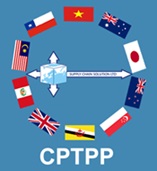
The CPTPP is a free trade agreement between 11 countries:
– Canada, Mexico, Peru, Chile (Americas)
– Japan, Malaysia, Brunei, Singapore, Vietnam (Asia)
– Australia, New Zealand (Oceania)
The UK’s accession in 2023 unlocks a combined market of £12 trillion GDP and over 500 million consumers, with significant benefits for food and drink exporters.
Key Advantages for UK Food & Drink Exporters
Tariff Elimination on Many Food and Drink Exports
One of the most immediate benefits of CPTPP membership is the phased elimination of tariffs on key UK exports. This makes British products more competitive in markets where import costs were previously prohibitive.
– Cheese & Dairy: Japan will eliminate tariffs on cheddar cheese (currently up to 29.8%) over 15 years, while Canada removes duties on UK chocolate (previously 5-8%).
– Meat & Seafood: Vietnam will reduce tariffs on UK pork from 15% to 0%, and Malaysia will scrap duties on salmon (previously 10-15%).
– Beverages: UK whisky exports already enjoy zero tariffs in Canada, Mexico, and Peru, with further reductions in Japan and Malaysia.
Reduced Trade Barriers for Agricultural and Processed Goods
CPTPP countries have agreed to minimize non-tariff barriers, such as restrictive quotas and complex licensing requirements. This means:
– Fewer export restrictions on UK meat, dairy, and processed foods.
– More predictable market access, reducing uncertainty for exporters.
Access to High-Growth Markets in the Asia-Pacific Region
Asia-Pacific is home to some of the fastest-growing consumer markets globally, with rising demand for premium, high-quality food and drink.
– Japan & Singapore: Strong appetite for UK whisky, cheese, and specialty snacks.
– Vietnam & Malaysia: Expanding middle class driving demand for British-branded tea, biscuits, and dairy.
– Mexico & Chile: Growing interest in UK confectionery and beverages.
Competitive Advantage Over Non-CPTPP Member Exporters
EU and US exporters face higher tariffs in CPTPP markets, giving UK businesses a pricing edge.
– Example: UK chocolate exporters to Canada now pay 0% tariff, while EU competitors still face 5-8%.
Simplified Customs Procedures for Faster Export Clearance
The CPTPP standardizes trade documentation and digital processes, reducing delays at borders. Benefits include:
– Faster clearance times for perishable goods like meat and dairy.
– Lower administrative costs due to streamlined paperwork.
Increased Export Opportunities for UK Dairy, Meat, and Beverages
With lower tariffs and fewer restrictions, UK producers can expand sales of:
– Dairy: Cheese, butter, and cream to Japan and Mexico.
– Meat: Pork, beef, and lamb to Vietnam and Canada.
– Beverages: Whisky, gin, and premium soft drinks across CPTPP markets.
Protection Against Arbitrary Trade Restrictions
The CPTPP includes legally binding dispute mechanisms, preventing sudden import bans or unfair technical barriers. This provides:
– More stable trade conditions for UK exporters.
– Greater confidence when entering new markets.
Potential for Increased Investment in UK Food Production
As demand grows, CPTPP investors may fund UK processing facilities, farms, and innovation projects, boosting domestic production capacity.
Stronger Supply Chain Integration with CPTPP Member Countries
UK manufacturers can source ingredients (e.g., Canadian wheat, New Zealand dairy) at lower costs while still qualifying for CPTPP tariff benefits under cumulation rules.
Recognition of UK Food Standards, Aiding Market Acceptance
CPTPP members acknowledge UK food safety and quality standards, reducing the need for costly reformulations or additional certifications.
Opportunity to Diversify Export Markets Beyond the EU
Reducing reliance on the EU, UK exporters can spread risk and tap into new revenue streams across Asia-Pacific and the Americas.
Easier Compliance with Unified Regional Trade Regulations
A single set of rules for CPTPP markets simplifies compliance, cutting costs for businesses selling to multiple countries.
How UK Businesses Can Prepare for CPTPP Exports
- Check Tariff Reductions: Use the UK Trade Tariff Tool to identify savings.
- Verify Rules of Origin: Ensure products meet CPTPP criteria for preferential rates.
- Engage Local Distributors: Partner with in-market experts to navigate regulations.
-
Leverage Government Support: Access grants via Department for Business & Trade (DBT) (https://www.great.gov.uk/).
Additional Resources
Ready to explore CPTPP markets? Start planning your export strategy today!
Would you like further details on specific products or countries?
The entire export, shipping, warehousing & distribution process will be handled by Supply Chain Solution Ltd (Food & Drink Grade Logistics Specialists).
For any enquiries please email: trading@cptpp.co.uk
Global Trade news updates
- WTO chairpersons for 2026by WTO on March 11, 2026 at 12:00 am
The WTO General Council, on 11 March 2026, noted consensus on a slate of names of chairpersons for WTO bodies.
- Russia notifies launch of safeguard investigation on tinplateby WTO on March 11, 2026 at 12:00 am
On 11 March 2026, the Russian Federation notified the WTO’s Committee on Safeguards of the initiation on 4 March 2026 of a safeguard investigation on tinplate (certain flat-rolled products of iron or non-alloy steel) imported into the customs territory of the Eurasian Economic Union.
- Launch of third phase of EIF activities at MC14 high-level eventby WTO on March 11, 2026 at 12:00 am
A high-level event marking the launch of the Enhanced Integrated Framework’s (EIF) third phase of activities will take place on the margins of the 14th WTO Ministerial Conference (MC14) in Yaoundé, Cameroon, on 25 March. The EIF’s work is dedicated to harnessing trade and investment for prosperity and sustainable economic growth in least-developed countries (LDCs).
- Director-General updates members on final preparations for "turning point" ministerialby WTO on March 10, 2026 at 12:00 am
Director-General Ngozi Okonjo-Iweala updated members on final preparations for the WTO's upcoming 14th Ministerial Conference (MC14) in Yaoundé, Cameroon, to take place on 26-29 March. She told a 10-12 March meeting of the General Council that she intends to send to ministers an informal "state-of-play" package next week with documents representing the current state of work in Geneva, as well as a final "Road to Yaoundé" document outlining how MC14 will be conducted.
- The value of the WTO: An economics viewpoint in six instalmentsby WTO on March 9, 2026 at 12:00 am
Why do economies negotiate trade agreements? If unilateral free trade can benefit an economy, why do governments devote so much effort to negotiating reciprocal tariff reductions and detailed trade rules with their partners? The answer lies in a fundamental feature of trade policy: when governments act independently, their policies affect not only their own economies but also the economies of others.
- From field to factory, football and fashion: MC14 high-level event to spotlight cottonby WTO on March 9, 2026 at 12:00 am
A high-level event on cotton will be held on the eve of the 14th Ministerial Conference in Yaoundé, Cameroon, on 25 March to highlight cotton’s importance to global trade and investment opportunities, particularly for Central and West African countries looking to move up the value chain. The event will feature the launch of the Partenariat pour le Coton Investment Platform, spotlighting of fashion and textile/garment entrepreneurs, and unveiling by FIFA representatives and Cameroon football legends of FIFA's tee-shirts and polo shirts to be distributed under the FIFA Football for Schools programme.